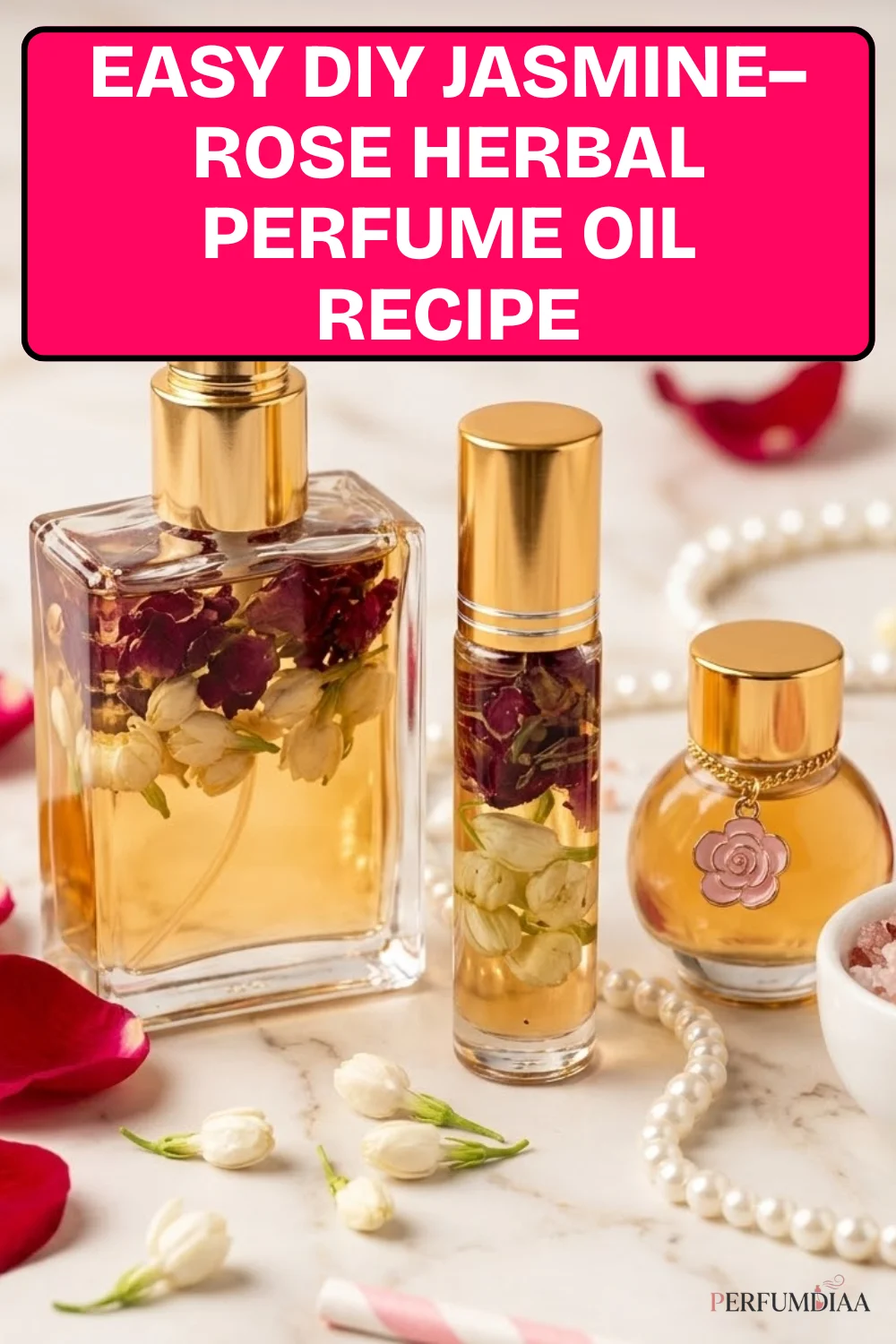
Homemade Jasmine–Rose Herbal Perfume Oil Recipe
If you love soft floral fragrances and natural beauty DIYs, this Homemade Jasmine–Rose Herbal Perfume Oil Recipe is a simple and rewarding project to try. I’ve always loved making natural perfumes at home, and this blend is one I return to often because it feels elegant, feminine, and gentle on the skin. Jasmine and rose create a beautifully balanced scent—fresh, romantic, and timeless.
One of the things I enjoy most about homemade perfume oils is how personal they feel. Instead of using synthetic fragrances, you’re creating something meaningful with real botanicals.
In this recipe, dried jasmine and rose slowly infuse into a nourishing carrier oil, allowing the fragrance to develop naturally.
The result is a soft floral perfume oil that glides smoothly onto pulse points and releases a delicate scent throughout the day. It’s beginner-friendly and truly satisfying to make.
Why Make Your Own Herbal Perfume Oil
Honestly? Once you go homemade, it’s really hard to go back. Store-bought perfumes are often loaded with synthetic chemicals, alcohol, and artificial fixatives that can irritate sensitive skin.
When you make your own herbal perfume oil at home, you get to control exactly what goes on your body — and that’s a big deal.
Here’s why I’m obsessed with DIY perfume oils:
- Clean ingredients only. No parabens, no phthalates, no mystery chemicals. Just flowers and oil.
- Super affordable. A 10 ml roller bottle of this recipe costs less than $5 to make, and it lasts for months.
- Skin-friendly formula. Carrier oils like jojoba and sweet almond oil are actually nourishing for your skin. It’s a perfume and a moisturizer in one.
- Long-lasting scent. Oil-based perfumes cling to skin longer than alcohol-based sprays because they don’t evaporate as quickly.
- 100% customizable. Once you get the hang of this basic recipe, you can experiment with other herbs, flowers, and essential oils endlessly.
- Perfect for gifting. A handmade perfume oil in a cute little roller bottle? People absolutely love receiving these.
Making your own herbal perfume oil is honestly one of the most satisfying DIY projects I’ve ever tried.
And this jasmine–rose blend? It smells expensive.
Fragrance Profile of Jasmine and Rose
Jasmine and rose are two of the most beloved flowers in perfumery, and when blended together they create a fragrance that feels romantic, soft, and uplifting.
To understand why this combination works so well, it helps to look at fragrance notes.
Top Notes
Top notes are the first scents you notice when applying perfume. In this blend, jasmine contributes a bright and slightly sweet floral opening. It immediately gives the perfume a fresh and uplifting character.
Middle Notes
The heart of the fragrance comes from rose petals. Rose provides a rich, soft, and romantic floral scent that feels classic and elegant. This middle layer is what gives the perfume its main personality.
Base Notes
Since this recipe uses a carrier oil instead of alcohol, the base notes come from the oil itself. Jojoba oil or sweet almond oil provide a smooth, warm foundation that gently holds the floral scent on the skin.
Ingredients
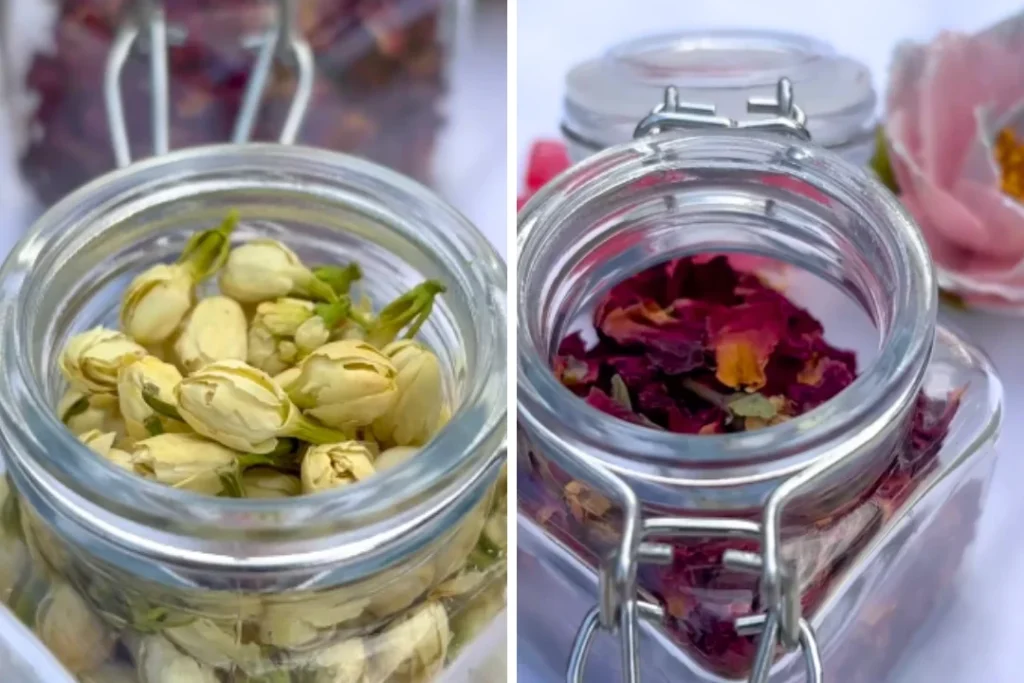
Dried rose petals – 1 teaspoon
Dried jasmine flowers – 1 teaspoon
Carrier oil – 10 ml (fill the bottle)
- Recommended options: jojoba oil or sweet almond oil
Glass roller bottle – 10 ml capacity (clean and dry)
Carrier Oil Comparison: Which One Should You Use?
| Jojoba Oil | Sweet Almond Oil | |
|---|---|---|
| Skin type | All skin types, including oily | Dry, normal, sensitive skin |
| Texture | Lightweight, silky | Slightly heavier, silky |
| Scent | Nearly odorless ✅ | Very mildly nutty |
| Shelf life | 2+ years (very stable) | 1–2 years |
| Best for | Perfume making (neutral base) | Skin nourishment + perfume |
| Nut allergy concern | None | ⚠️ Avoid if nut-allergic |
Where to Find Your Ingredients
- Dried rose petals & jasmine flowers: Look on Amazon, Etsy, Mountain Rose Herbs, or check your local health food store. Always buy cosmetic or food-grade dried flowers.
- Carrier oils: Whole Foods, Target, Amazon, or any natural beauty supply store.
- Glass roller bottles: Amazon has 10-packs for super cheap — stock up!
Equipment Needed
| Equipment | Why You Need It |
|---|---|
| 10 ml glass roller bottle (with roller insert) | The vessel for your perfume oil |
| Small funnel | Makes pouring the oil mess-free |
| Measuring spoons | For accurate flower measurements |
| Dropper or pipette (optional) | For precise oil filling |
| Labels and a pen | For dating and naming your creation |
| A clean, dry work surface | Prevents contamination |
Prep Time: 5 minutes (plus 2 weeks infusion time)
Cost: Low / Budget-friendly
Yield: 1 (10 ml) roller bottle perfume oil
Skill Level: Beginner-friendly
Best For: Natural DIY fragrance, everyday personal scent, handmade gifts
How To Make Jasmine–Rose Perfume Oil
Step 1: Prepare the Bottle
Start with a clean, completely dry 10 ml glass roller bottle. This is important — even a tiny bit of moisture inside can cause your oil to go rancid faster and will mess up the infusion. If you just washed it, let it air dry completely or use a hair dryer on low to dry the inside. Remove the roller ball insert and set it aside.
Step 2: Add the Dried Flowers
Using a small funnel or a folded piece of paper as a makeshift funnel, carefully add 1 teaspoon of dried rose petals and 1 teaspoon of dried jasmine flowers into the roller bottle.
The combination of these two florals creates a beautifully balanced aroma — rose adds that rich, romantic, velvety note, while jasmine brings in a bright, uplifting, slightly exotic sweetness. Together? Pure magic.
Step 3: Pour the Carrier Oil
Slowly pour your chosen carrier oil — jojoba or sweet almond — into the bottle until it reaches just below the neck, leaving a tiny bit of space for the roller insert. Use a small dropper or pipette if you want extra precision.
The carrier oil is doing the heavy lifting here. It acts as the solvent that gently extracts and holds the aromatic compounds from the dried flowers, creating your botanical perfume base.
Step 4: Seal the Bottle
Press the roller ball insert firmly back into the neck of the bottle, then cap it tightly. Give the bottle a gentle swirl to combine everything. This prevents air exposure and keeps your contents secure during the infusion period.
Step 5: Infuse the Perfume
Here’s where patience comes in! Store your sealed bottle in a cool, dark place — a drawer, a cabinet, or a windowless shelf works great. Let it infuse for 2 full weeks.
During this time, the carrier oil slowly draws out the natural aromatic compounds from the rose petals and jasmine flowers. The longer it sits, the richer and more complex the scent becomes. Give it a gentle shake or roll it between your palms every few days to help things along.
Step 6: Use Your Perfume Oil
After two weeks, your Homemade Jasmine–Rose Herbal Perfume Oil is ready! Roll a small amount onto your pulse points — wrists, neck, behind the ears, inside the elbows — and let that gorgeous floral scent bloom on your skin.
Tips for Better Fragrance
Use Fully Dried Flowers
Moisture can cause oils to spoil faster. Always use completely dried jasmine and rose petals.
Choose High-Quality Botanicals
Organic or culinary-grade dried flowers usually have stronger fragrance and better quality.
Shake the Bottle Occasionally
Gently shake the bottle every few days during the infusion period to help distribute the scent.
Allow the Full Infusion Time
Two weeks may seem long, but patience helps the oil develop a richer fragrance.
Store in a Dark Location During Infusion
Keeping the bottle away from sunlight helps preserve the delicate floral notes.
Use Jojoba Oil for Longer Shelf Life
Jojoba oil is more stable than many other oils and can keep the perfume fresh longer.
Test the Scent After Infusion
If the fragrance feels light, allow the flowers to continue infusing for another week.
How to Apply Perfume Oil Correctly
Applying perfume oil is a little different from spritzing a traditional spray perfume. Here’s how to get the most out of every drop:
Best pulse points to apply:
- Inner wrists
- Base of neck / throat
- Behind the ears
- Inside of elbows
- Behind the knees (for a scent trail that follows you when you walk!)
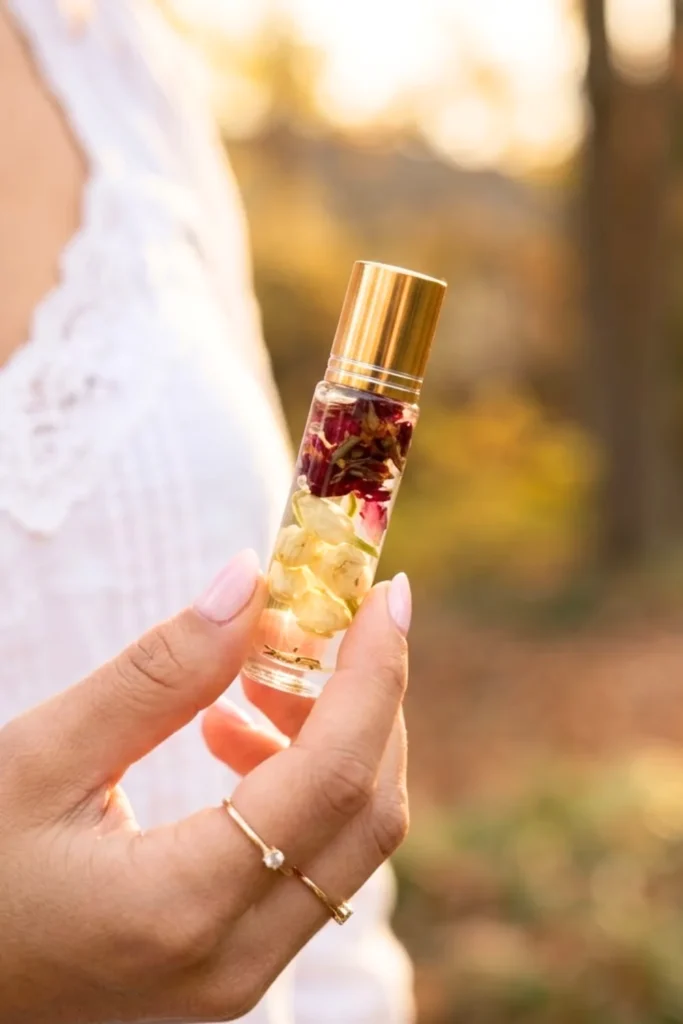
Do’s and Don’ts:
| DO | DON’T |
|---|---|
| Apply to clean, moisturized skin | Rub wrists together — it crushes the scent molecules |
| Layer over unscented lotion for longer wear | Apply directly to clothing (can stain) |
| Roll gently and let dry | Apply to irritated or broken skin |
| Reapply every 4–6 hours if desired | Store in a hot, sunny spot after applying |
Make Jasmine–Rose Perfume Spray
What You’ll Need:
- Small glass spray bottle (10–30 ml)
- Perfumer’s alcohol (or high-proof vodka as a substitute)
- Your completed jasmine–rose infused oil (or a few drops of jasmine + rose essential oils)
Simple Spray Formula:
| Component | Amount | Percentage |
|---|---|---|
| Perfumer’s alcohol | 8 ml | 80% |
| Jasmine–rose infused oil | 2 ml | 20% |
Instructions:
- Combine the infused oil and alcohol in your spray bottle.
- Cap tightly and shake well.
- Let it rest for 48 hours to allow the fragrance to “marry” with the alcohol.
- Spritz lightly on pulse points and in the air in front of you, then walk through the mist.
Storage and Shelf Life
Proper storage helps maintain the fragrance and freshness of your perfume oil.
Storage Tips
- Store in a cool, dry place
- Keep the bottle away from direct sunlight
- Close the roller cap tightly after use
Shelf Life
| Carrier Oil | Average Shelf Life |
|---|---|
| Jojoba Oil | 12–24 months |
| Sweet Almond Oil | 6–12 months |
Optional Variations
Once you feel comfortable making herbal perfume oils, you can experiment with additional scents.
- Vanilla Floral Blend – Add a small piece of vanilla bean to the bottle for a warm, creamy base note.
- Rose Garden Blend – Increase the rose petals slightly for a richer rose-forward fragrance.
- Jasmine Night Blend – Add a few dried lavender buds for a calming evening scent.
- Citrus Floral Blend – Add a small piece of dried orange peel to create a fresh floral citrus aroma.
Experimenting with botanicals allows you to create a perfume that truly reflects your personal style.
Safety Tips
- Patch test first. Before applying to pulse points, dab a small amount on the inside of your wrist and wait 24 hours to check for any skin reaction.
- Nut allergies: Sweet almond oil comes from tree nuts. If you have a nut allergy, use jojoba oil instead — it’s technically a liquid wax and not a nut oil.
- Keep away from eyes and mucous membranes. This is for external skin use only.
- Not intended for children under 2. Essential oils and botanicals can be potent for little ones.
- Pregnancy caution: If you’re pregnant or nursing, check with your healthcare provider before using jasmine essential oil in particular, as it can be stimulating.
- Use cosmetic-grade or food-grade dried flowers only. Decorative dried flowers from craft stores may be treated with dyes or preservatives you don’t want on your skin.
Make It a Gift
Homemade perfume oil also makes a beautiful handmade gift.
A small roller bottle filled with floral perfume feels thoughtful, personal, and luxurious.
Simple Gift Ideas
- Tie a ribbon around the roller bottle
- Add a small handwritten label
- Include a mini gift box
Pinterest-Worthy Presentation Tip
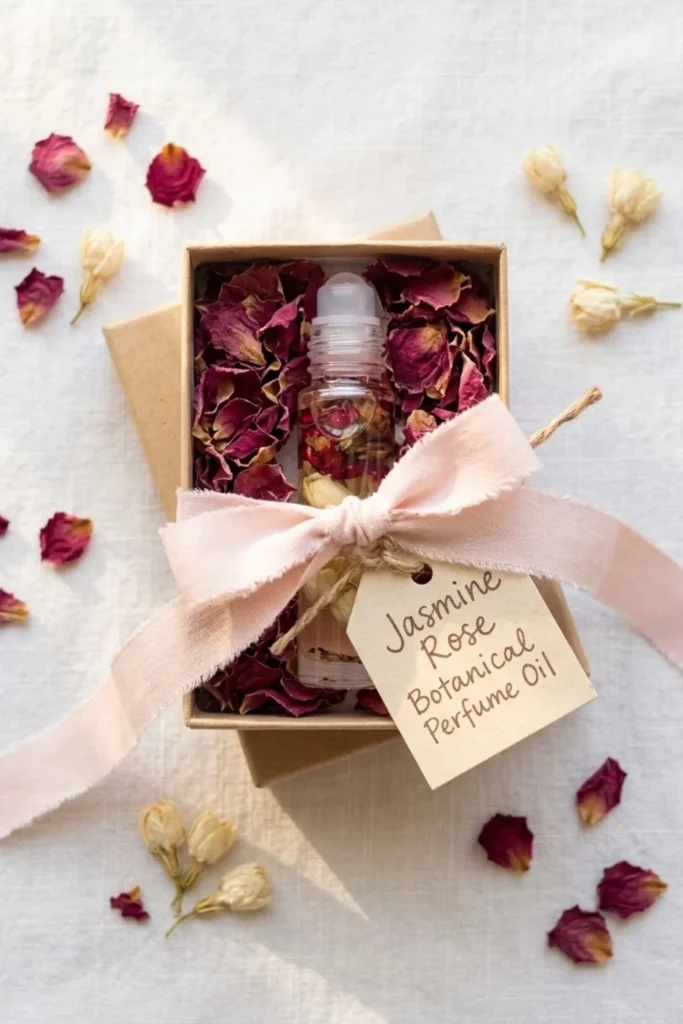
For a visually beautiful gift, place the roller bottle inside a small kraft box with a few dried rose petals scattered around it. Add a handwritten tag with the perfume name like “Jasmine Rose Botanical Perfume Oil.”
This type of presentation looks elegant and photograph-ready, perfect for sharing on Pinterest or gifting for birthdays, holidays, or bridal showers.
Final Words
Creating your own perfume at home is a beautiful way to combine creativity, natural ingredients, and self-care.
This Homemade Jasmine–Rose Herbal Perfume Oil Recipe is simple, elegant, and perfect for beginners who want to explore DIY fragrance making.
With just a few ingredients and a little patience during the infusion process, you can create a soft floral perfume that feels personal and luxurious.