DIY Sugar Plum Perfume Recipe: A Sweet & Enchanting Homemade Fragrance
If you’ve ever dreamed of smelling like a cozy holiday fairytale, this DIY Sugar Plum Perfume Recipe is about to become your new obsession.
I first created this blend on a chilly November evening when I wanted something warm, fruity, and absolutely magical — and honestly, I haven’t stopped wearing it since.
This perfume captures the essence of ripe plums dusted with sugar, layered with hints of vanilla, warm spice, and soft florals.
It’s sweet without being overwhelming, sophisticated yet playful, and perfect for anyone who loves a gourmand-inspired scent.
Whether you’re brand new to perfume-making or you’ve been blending oils for years, this Sugar Plum Perfume Recipe is beginner-friendly, customizable, and uses ingredients you can easily find online or at your local craft store.
The best part?
You’ll end up with a gorgeous, one-of-a-kind fragrance that smells way more expensive than it actually is.
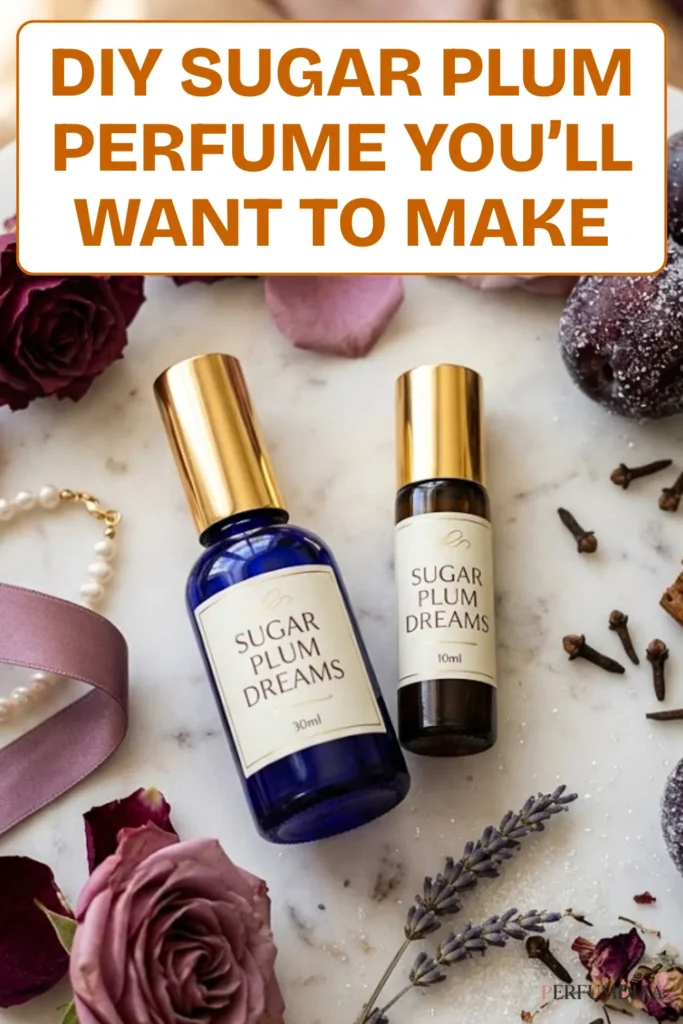
Why Make Your Own Sugar Plum Perfume
I’ll be the first to tell you — once you start making your own perfumes, you’ll never look at department store fragrances the same way again.
Here’s why I think every woman should try DIY perfume-making at least once:
You control every single ingredient. No mystery chemicals, no synthetic fillers, no ingredients you can’t pronounce. Just pure, intentional scent-building with things you actually trust putting on your skin.
It’s wildly affordable. A high-end plum-based perfume can easily run you $80–$150. This recipe? You’re looking at a fraction of that cost, and you’ll have enough supplies to make multiple bottles.
It’s completely customizable. Want it sweeter? Add more vanilla. Prefer a spicier kick? Bump up the cinnamon or clove. YOU are the perfumer here.
It makes the most thoughtful gift. Imagine handing someone a beautiful little bottle of handmade perfume during the holidays. Pinterest-worthy and heartfelt — it doesn’t get better than that.
Making your own sugar plum perfume isn’t just a craft project. It’s a little act of self-care and creativity rolled into one.
Fragrance Profile of Sugar Plum Perfume
| Note Type | What It Smells Like | Role in the Perfume |
|---|---|---|
| Top Notes | Bright plum, red berries, citrus sparkle | The first scent you notice |
| Middle Notes | Floral notes, jammy fruit, soft spice | The heart of the perfume |
| Base Notes | Vanilla, musk, amber, sandalwood | The long-lasting dry-down |
Top Notes
The top notes in sugar plum perfume are usually fruity and bright. Plum is the star here, but it often pairs beautifully with black currant, raspberry, orange, or bergamot. These notes create that juicy first impression that feels lively and inviting.
Middle Notes
The middle notes are what make the perfume feel full and feminine. I like using hints of rose, violet, or jasmine alongside the fruity notes because they soften the sweetness and make the fragrance feel more elegant.
A tiny touch of cinnamon or clove can also add a cozy holiday vibe if you want that.
Base Notes
The base notes are what give sugar plum perfume staying power. Vanilla is a favorite because it adds creamy sweetness, while amber, musk, and sandalwood make the scent feel warmer and more polished.
This is what helps the perfume linger on your skin instead of disappearing too fast.
Ingredients
Fragrance Oils & Essential Oils
- Plum fragrance oil — 8 drops
- Black cherry fragrance oil — 4 drops
- Bergamot essential oil — 3 drops
- Cinnamon bark essential oil — 2 drops
- Rose absolute or rose fragrance oil — 3 drops
- Clove bud essential oil — 1 drop
- Vanilla oleoresin or vanilla fragrance oil — 6 drops
- Sandalwood essential oil — 4 drops
- White musk fragrance oil — 3 drops
Carrier/Base
- Jojoba oil — 2 tablespoons (for perfume oil)
- OR Perfumer’s alcohol / high-proof vodka — 2 tablespoons (for perfume spray)
Optional Add-Ins
- Vitamin E oil — 2–3 drops (acts as a natural preservative)
- A tiny pinch of cosmetic-grade mica or biodegradable glitter for a shimmer effect
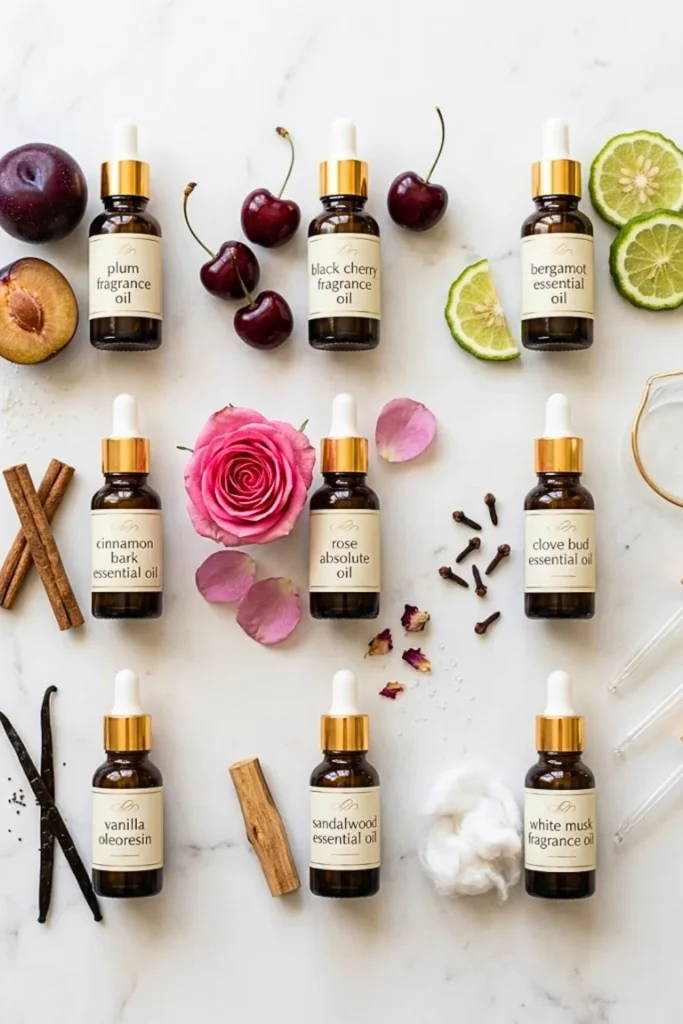
Quick Note: You can use either essential oils or fragrance oils for this recipe. Essential oils are natural but tend to have a lighter scent throw. Fragrance oils are synthetic but offer stronger, longer-lasting aromas and more variety (like “plum” and “black cherry,” which don’t exist as true essential oils). I personally love mixing both!
Equipment Needed
You don’t need fancy tools to make homemade perfume, which is one of the reasons I recommend this project for beginners.
What You’ll Need
- Small glass mixing bowl or beaker
- Glass dropper or pipettes
- Measuring spoons
- Stirring rod or small glass stir stick
- Dark glass roller bottle, 10 ml or 30 ml
- Small funnel
- Labels or sticker tags
- Gloves, optional but helpful
- Notebook or phone notes to track your blend
Best Bottle Choices
| Bottle Type | Best For | Why It Works |
|---|---|---|
| Roller bottle | Perfume oil | Easy application and portable |
| Spray bottle | Perfume mist | Great for a lighter fragrance experience |
| Mini sample vial | Testing blends | Perfect for trying small batches |
How To Make Sugar Plum Perfume
Step 1: Prepare Your Workspace
Start with a clean, dry workspace. Lay out all your ingredients and tools so everything is easy to reach. If you’re using multiple oils, keeping things organized makes the process much less overwhelming.
Step 2: Add the Carrier Oil
Pour 2 tablespoons of jojoba oil or fractionated coconut oil into your glass mixing bowl or directly into your bottle if it has a wide opening. Jojoba is my personal favorite because it has a light feel and a long shelf life.
Step 3: Add Your Fragrance Notes
Now add the fragrance oils one by one:
- 18 drops plum fragrance oil
- 10 drops vanilla
- 6 drops sweet orange
- 4 drops rose
- 4 drops sandalwood
- 4 drops amber
If you’re customizing with optional oils, add them now in very small amounts.
Step 4: Stir or Swirl
Use a glass stir stick to gently mix the oils together. If you’re blending directly in the bottle, close it and roll it between your hands instead of shaking too aggressively.
Step 5: Smell and Adjust
Dip a fragrance strip or cotton swab into the blend and smell it. If you want it sweeter, add a bit more vanilla. If you want it fruitier, add a few more drops of plum or berry notes. If it feels too sugary, add a touch more sandalwood or amber.
Step 6: Bottle It
Use a funnel or dropper to transfer your perfume into a roller bottle or storage bottle. Seal it tightly.
Step 7: Let It Mature
This step is important. Let the perfume sit in a cool, dark place for at least 48 hours, though 1–2 weeks is even better. This aging process helps the notes blend together into a smoother, more polished scent.
Tips for Better Fragrance
After making dozens of batches of homemade perfume, here are the tips I wish someone had told me from the very beginning:
- Always build from the bottom up. Start with base notes, then middles, then tops. It gives you way more control over the final scent.
- Less is more with spice oils. Cinnamon and clove are gorgeous but incredibly potent. One extra drop can throw your whole blend off. Start small — you can always add more.
- Don’t judge your blend immediately. Fresh mixes smell sharp and a little “off.” Give it at least 24–48 hours before you decide if you love it or want to tweak it.
- Keep a scent journal. Write down every recipe, every tweak, every thought. You will absolutely forget what you did if you don’t, and there’s nothing worse than making a perfect blend and not being able to recreate it.
- Test on your skin, not just paper. Perfume interacts with your body chemistry. What smells one way on a paper strip can smell completely different on your wrist.
- Use high-quality oils. I know it’s tempting to grab the cheapest option, but the quality of your oils directly impacts the quality of your finished perfume. Invest in reputable brands — your nose will thank you.
- Layer your perfume with matching body products. If you have an unscented lotion, add a few drops of your blend to it. Layering helps the scent last SO much longer.
How to Apply Perfume Oil Correctly
Perfume oil works a little differently than spray perfume, and applying it right makes a huge difference in how long it lasts and how it smells.
Best pulse points for application:
- Inner wrists
- Behind the ears
- Base of the throat
- Inside of the elbows
- Behind the knees
Roll the oil onto your pulse points and gently press — never rub. Rubbing creates friction and heat that can break down the top notes and change how the fragrance develops.
Bonus Tip: Apply your perfume oil right after a shower when your skin is still slightly damp and warm. Your pores are open and will absorb the fragrance better, giving you longer-lasting scent throughout the day.
For the best longevity, apply a thin layer of unscented moisturizer to your pulse points first, then layer the perfume oil on top. Hydrated skin holds fragrance significantly longer than dry skin.
Make Sugar Plum Perfume Spray
Prefer a spray version? I totally get it — sometimes you just want that satisfying spritz! Here’s how to convert this recipe:
| Feature | Perfume Oil (Rollerball) | Perfume Spray |
|---|---|---|
| Base | Jojoba oil | Perfumer’s alcohol or 80-proof+ vodka |
| Application | Roll-on | Spray mist |
| Scent Strength | Intimate, close to skin | Projects more, wider scent cloud |
| Longevity | Often longer-lasting | May need reapplication |
| Best For | Everyday wear, sensitive skin | Events, layering, sharing |
To make the spray version:
- Follow the same oil recipe above (all the same drops).
- Replace the jojoba oil with 2 tablespoons of perfumer’s alcohol or high-proof vodka.
- Mix well and pour into a small glass spray bottle (10ml–30ml works great).
- Let it cure for 2–4 weeks — spray versions really benefit from a longer curing time.
- Shake gently before each use, as the oils may naturally separate slightly.
Storage and Shelf Life
Proper storage is the key to keeping your perfume smelling fresh and beautiful for as long as possible.
- Store in a cool, dark place. A dresser drawer, medicine cabinet, or closet shelf works perfectly. Avoid windowsills, bathrooms (humidity!), and anywhere with temperature fluctuations.
- Always use dark glass bottles. Amber, cobalt blue, or violet glass protects your blend from UV light degradation.
- Keep the cap tight. Oxygen exposure can oxidize your oils and change the scent over time.
Expected shelf life:
- Perfume oil (jojoba base): 6–12 months
- Perfume spray (alcohol base): 12–18 months
- Adding a few drops of vitamin E oil can help extend shelf life by acting as a natural antioxidant.
If your perfume starts to smell “off,” looks cloudy, or changes color dramatically, it’s time to make a fresh batch.
Optional Variations
One of my absolute favorite things about this recipe is how easy it is to customize. Here are some fun variations to try once you’ve mastered the base recipe:
- 🍫 Chocolate Sugar Plum: Add 3–4 drops of cocoa absolute or chocolate fragrance oil to the base notes for a rich, indulgent twist.
- 🌿 Herbal Sugar Plum: Swap the bergamot for 3 drops of lavender essential oil for a more relaxed, herbal-fruity vibe.
- 🎄 Holiday Sugar Plum: Increase the cinnamon to 3 drops and add 2 drops of nutmeg essential oil for full-on holiday warmth.
- 🌸 Floral Sugar Plum: Double the rose and add 2 drops of jasmine absolute for a more romantic, feminine take.
- 🍑 Peachy Sugar Plum: Add 3 drops of peach fragrance oil alongside the plum for an extra juicy, summery feel.
Feel free to experiment! The whole point of DIY perfumery is making something that’s uniquely, beautifully you.
Safety Tips
Even though we’re working with beautiful, lovely-smelling ingredients, safety always comes first. Please keep these guidelines in mind:
- Always do a patch test. Apply a tiny amount of your finished perfume to the inside of your wrist and wait 24 hours to check for any irritation or allergic reaction.
- Never apply undiluted essential oils directly to your skin. They must always be blended with a carrier oil or alcohol base.
- Be cautious with cinnamon and clove oils. These are known skin sensitizers. Stick to the recommended drop counts — more isn’t better with these potent oils.
- Keep your perfumes away from children and pets. Many essential oils are toxic to cats and dogs, even in small amounts.
- If you’re pregnant or nursing, consult your healthcare provider before using essential oils, as some (like clove and cinnamon) may not be recommended.
- Bergamot is phototoxic. If using bergamot essential oil (not the FCF version), avoid direct sun exposure on areas where you’ve applied the perfume for at least 12 hours.
Make It a Gift
This sugar plum perfume makes an absolutely stunning handmade gift — for holidays, birthdays, bridal showers, galentine’s parties, or just because. Here’s how I like to package mine:
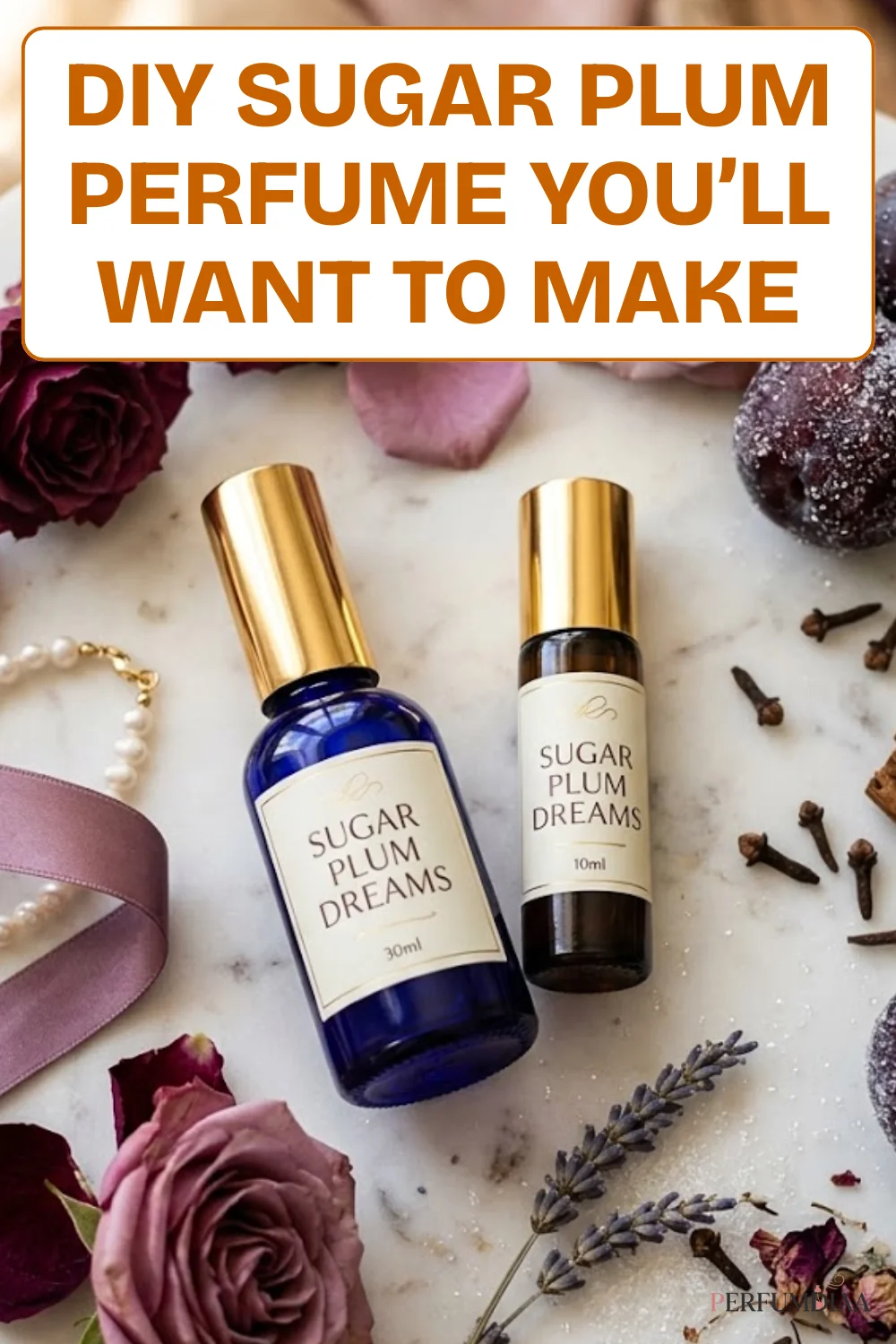
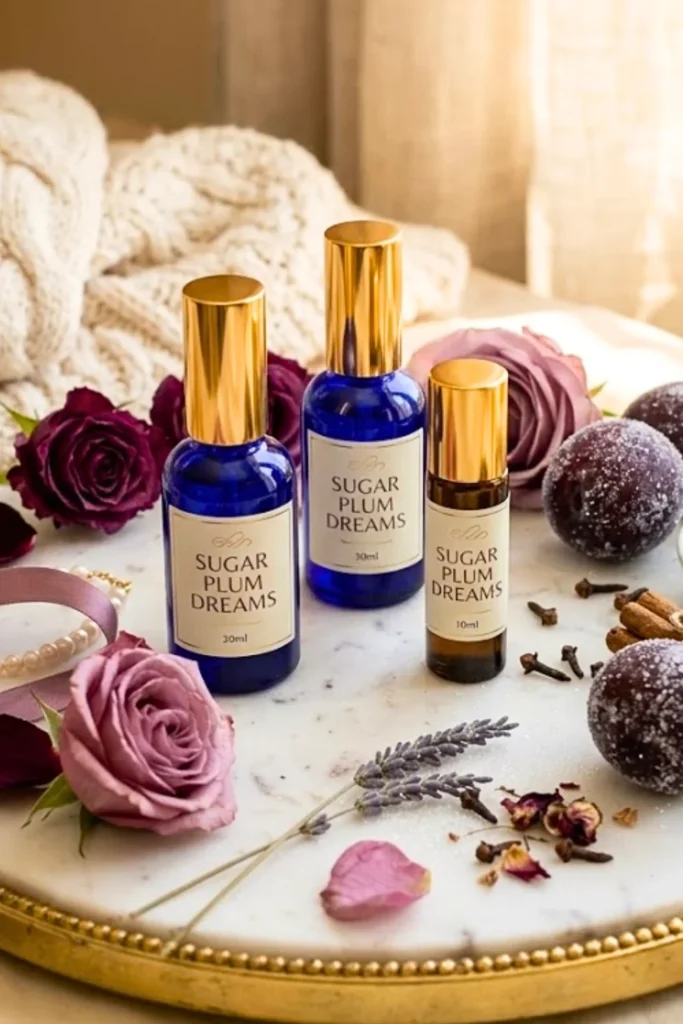
Bottle presentation: Use a beautiful 10ml rollerball bottle with a gold or rose gold cap. Add a small custom label with the perfume name (“Sugar Plum Dreams” sounds gorgeous, right?) and the date it was made.
Packaging ideas:
- Nestle the bottle in a small kraft box with shredded tissue paper or dried flower petals
- Tie a satin ribbon or twine bow around the bottle neck
- Include a small handwritten card with application tips
- Pair it with a matching sugar plum lip balm or body butter for a mini gift set
📌 Pinterest-Worthy Presentation Tip
Arrange your finished perfume bottles on a marble tray or vintage dish with some dried roses, cinnamon sticks, and a few sugar-coated plums (real or faux). Snap a photo with soft, natural lighting — maybe near a window with a cozy knit blanket in the background. This kind of styled flat-lay photo performs incredibly well on Pinterest and is perfect for your boards! Use keyword-rich descriptions like “DIY Sugar Plum Perfume Recipe — Handmade Gift Idea” to help your pin get discovered.
Frequently Asked Questions
1. Can I make this perfume without fragrance oils — only essential oils?
You can, but you won’t achieve the exact same plum and cherry scent since those don’t exist as true essential oils. You could substitute with a blend of bergamot, sweet orange, and ylang-ylang for a fruity-floral alternative that’s 100% natural.
2. How long does homemade perfume oil last on the skin?
Typically 4–8 hours depending on your skin type, the weather, and how you apply it. Oilier skin tends to hold fragrance longer. Moisturizing before application also helps.
3. Can I use sweet almond oil instead of jojoba oil?
Absolutely! Sweet almond oil is a great carrier oil for perfume. Just keep in mind it has a slightly shorter shelf life than jojoba and may feel a touch heavier on the skin.
4. Is this recipe safe for sensitive skin?
The recipe uses standard dilution ratios that are generally considered skin-safe for most adults. However, always do a patch test first, especially if you’re sensitive to cinnamon or clove oils.
5. Can I use this perfume during summer, or is it just a fall/winter scent?
While sugar plum leans cozy and warm, it’s absolutely wearable year-round! For summer, you might want to increase the bergamot and reduce the cinnamon slightly for a lighter feel.
6. Where can I buy the oils for this recipe?
I love shopping at Bramble Berry, Nature’s Garden, and Plant Therapy for fragrance and essential oils. Amazon also has great options — just read reviews and choose reputable sellers.
7. How many bottles does this recipe make?
This recipe makes approximately one 10ml rollerball bottle. To make larger quantities or multiple bottles, simply multiply all the ingredients proportionally.
8. Can I add color to my perfume?
You can! A tiny drop of skin-safe liquid colorant or cosmetic-grade mica can give your perfume a gorgeous tint. Just be careful — a little goes a very long way, and some colorants can stain clothing.
9. My perfume smells different after curing — is that normal?
Completely normal! Curing allows the individual notes to blend and harmonize. The scent will often become smoother, more rounded, and more cohesive after 1–2 weeks. If you’re not happy with how it smells fresh out of the mixing bowl, give it time before making changes.